





















 Contact


Share This Article
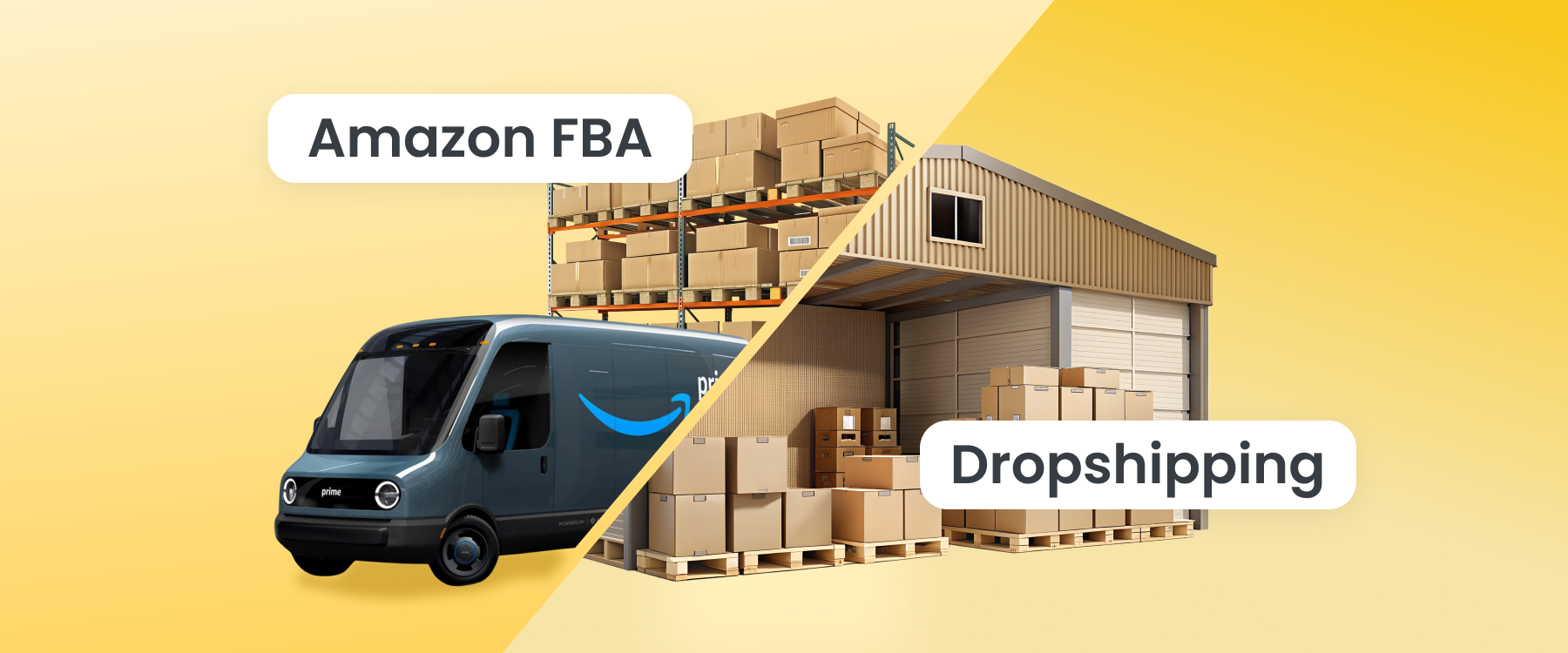
In the ecommerce world, Amazon FBA and dropshipping stand out as two popular business models for selling online products. Both offer unique advantages and can be tailored to different online business models and sales strategies. However, nowadays, choosing the right model could make the difference between the success and failure of an ecommerce.
In this article, we delve into both approaches, Amazon fba vs dropshipping, and look at which is best. We compare the advantages and disadvantages of both online sales systems, and help you to make the best decision for your business.
What is Amazon FBA and how does it work?
Amazon FBA (Fulfillment by Amazon) is a service that allows sellers to store their products in Amazon warehouses. Amazon takes care of the entire logistics process, including storage, packaging, shipping and returns. This offers sellers the possibility of benefitting from Amazon’s infrastructure and reputation.
Benefits of Amazon FBA
- Exposure to millions of buyers: By listing products on Amazon you have access to a consolidated market, but also one that is highly competitive.
- Simplified logistics: With Amazon FBA, Amazon manages the inventory, shipping and returns, allowing sellers to focus on product acquisition.
- Prime Shipping: Products may be eligible for fast shipping through Amazon Prime, Amazon’s premium programme, facilitating the buying and logistics process for customers.

Disadvantages of Amazon FBA
- High start-up investment: It requires the purchase of an inventory and incurs storage costs.
- Additional costs: Sales commissions and storage costs may reduce the final profit margin.
- Financial risks: If the products don’t sell, the accumulated stock may create losses.
What is Dropshipping and what are its advantages?
Dropshipping is a business model in which the seller acts as an intermediary between the supplier and the end customer. The seller does not need to store products as the orders are shipped directly from the suppliers’ warehouse to the end customer. This model is forecast to grow by 22% in Europe over the next 5 years, and will have a global market of 931 million dollars by 2030.
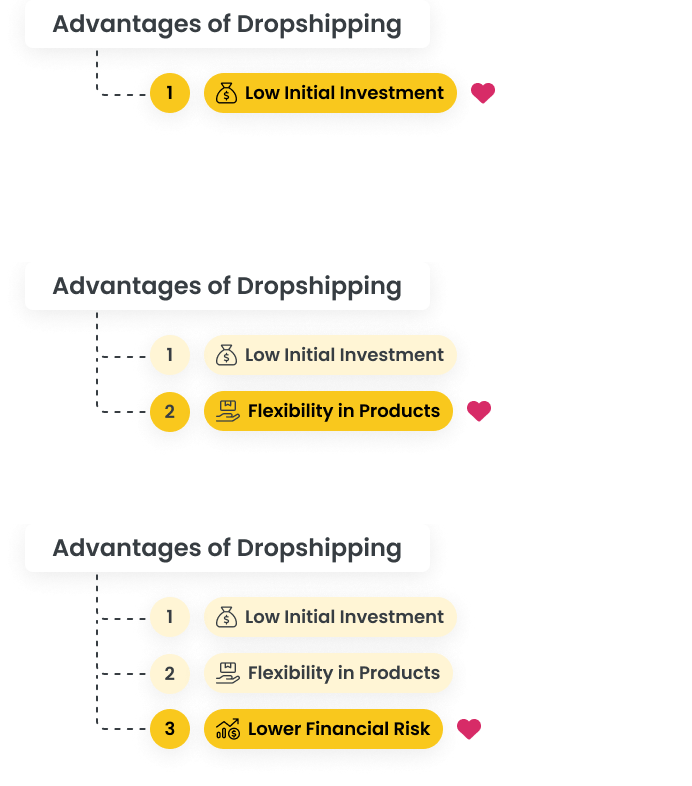
Advantages of Dropshipping
- Low start-up investment: You don’t need to purchase an inventory in advance and there are no costs for storage or facilities.
- Product flexibility: You can sell a wide range of items and multi-categories without having to worry about storage.
- Lower financial risk: By not having to manage physical inventories, losses due to unsold products are reduced.
Disadvantages of Dropshipping
- Greater dependency on suppliers: It is important to find quality suppliers that enable you to work without affecting the service provided.
- Limited control: You don’t have full control of deadlines, so it is important to work with suppliers that can guarantee you the best service.
- Competition: High levels of competition and market saturation with some products and categories means that margins may be reduced in some cases.
Amazon FBA vs Dropshipping: Comparing both models
As can be seen, both models have very different management systems with varied features that make many people question the profitability of dropshipping vs amazon fba. Below, we provide a detailed comparison so that you can evaluate which model best suits your business strategy:
| Feature | Amazon FBA | Dropshipping |
| Start-up investment | High (purchase of inventory) | Low (no need for inventory) |
| Logistics | Managed by Amazon | Managed by external suppliers |
| Product Flexibility | Limited to your own inventories | Wide variety of products available |
| Risks | High costs if products don’t sell | Dependent on suppliers |
| Benefit Margin | Potentially lower due to commissions | Higher, depending on supplier |
| Scalability | High, with investment in the inventory | High, without the need for high investments |
Which is the best model for you?
Amazon FBA is recommended for sellers with start-up capital, popular products that are tried and tested in the market and a focus on the automation of logistics processes. For its part, the Dropshipping model is perfect for sellers and business owners with lower budgets, flexibility to try new market niches, multi-product, or those who want to minimise financial risks. Both models can be profitable, but the choice will depend on the financial and logistic objectives of each business owner.
Initial investment and operational costs
Amazon FBA requires significant start-up investment to acquire an inventory and pay for storage costs at Amazon logistics centres, in addition to costs for shipping and commission on sales. This start-up investment could be high, particularly for business owners who are just starting out. In order to create a significant income, the inventory needs to be managed efficiently and you need a high volume of sales.
Conversely, dropshipping allows business owners to start with a much smaller budget. You don’t need to acquire an inventory beforehand, as products are only purchased once a sale has been made. This removes storage costs and allows sellers to work with more flexible profit margins. These features make this an affordable choice for those wanting to start with a small amount of capital and without committing themselves to large amounts of stock.
Risks: Which is the safest model?
One of the greatest risks of Amazon FBA is the need to hold large amounts of stock, which involves additional storage costs. If the products don’t sell quickly, those costs can grow and affect the profitability of the business. In some cases, if the stock does not move, Amazon can charge long-term storage prices which can drastically reduce profit margins. In Europe, storage costs have also increased due to the lack of space in logistics centres, which has made some sellers reconsider their use of Amazon FBA, particularly those with products that have low sales volumes.
In the dropshipping model, the main risk revolves around dependency on external suppliers. If suppliers don’t honour the delivery periods or they ship low quality products, this could end up affecting the seller’s reputation and lead to customer returns. Although dropshipping minimises direct financial risks, it also involves a lack of control over the stock and service to the customer.
Profit margins
At Amazon FBA, profit margins can be relatively low due to the various commissions and prices that Amazon charges for using its platform. These include reference costs, storage costs, fulfilment costs and shipping costs, all of which can reduce your margins considerably. According to a report by Jungle Scout, sellers’ profit margins on Amazon FBA in Europa can be range between 10% and 20%, depending on the type of product and storage costs.
In the case of dropshipping, profit margins tend to be higher, as the seller has more control over prices and does not have to pay storage or stock management costs. Moreover, if sellers have a high sales volume, they can negotiate better conditions with their suppliers or set up exclusive agreements, something that doesn’t happen with Amazon.
Logistics and shipping timescales
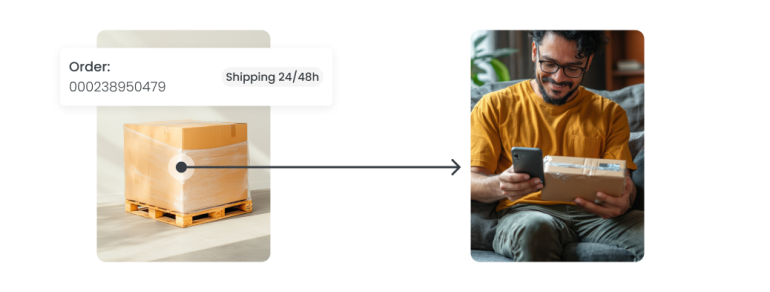
Amazon FBA guarantees fast shipping, thanks to its logistics infrastructure which consists of a global network of warehouses and efficient management systems. These fast shipping services, which are up to one day with Amazon Prime, can be highly attractive for European customers who have extremely high expectations of fast shipping.
With dropshipping, logistics can be more complicated. The seller does not handle the stock or shipping directly, which means delivery times are dependent on suppliers. However, due to the importance of product delivery for the end customer, many European suppliers have substantially improved their service, being able to offer faster delivery times and competitive shipping charges, which helps to mitigate this problem.
Customer base and portfolio
Amazon FBA provides immediate access to the large customer base at Amazon. Sellers benefit from their visibility on a platform that already has millions of active customers. However, Amazon limits direct contact between seller and customer, limiting the seller’s ability to personalise the shopping experience, engender loyalty from customers or use the data generated from purchases. In short, a seller on Amazon FBA will have less control over their relationship with their customers. Competition on Amazon is also fierce, which means sellers must invest large amounts on advertising and product optimisation in order to stand out among thousands of similar products.
In the dropshipping model, sellers have the advantage of building a closer and more direct relationship with their customers. They can create a personalised brand, offer customer service and use marketing strategies such as email and content to encourage customer loyalty. Dropshipping sellers also have greater control over the shopping experience, which allows them to generate long-term customer loyalty. In Europe, direct marketing and customer retention strategies are essential in order to stand out from the crowd, as the European consumer is becoming increasingly discerning when it comes to the quality of the service they expect to receive.
Is it possible to do dropshipping on Amazon?
Yes, it is possible to combine both models and make the most of the advantages of both. You can use Amazon as a sales platform while applying the dropshipping model. This allows you to take advantage of Amazon’s reputation without committing start-up capital on stock.
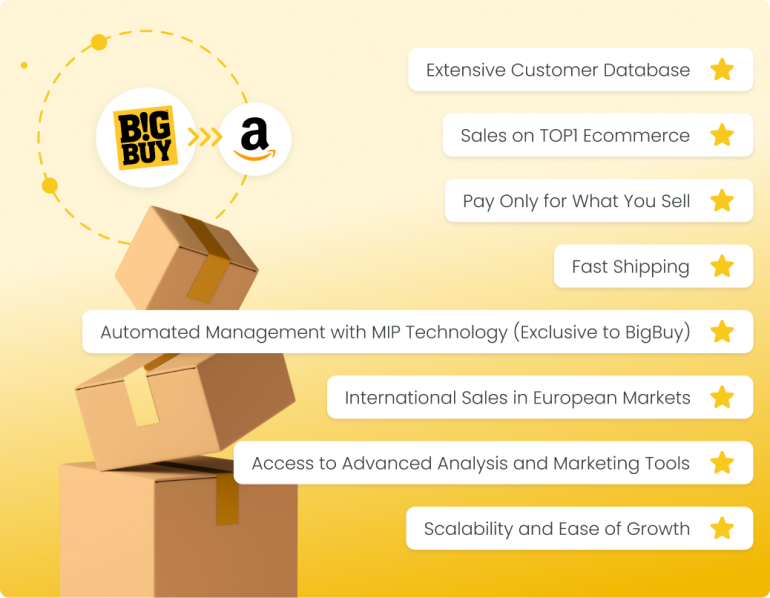
Here at BigBuy, we can help you to do dropshipping on Amazon directly, by allowing you:
- Access to an enormous customer database
- To sell on the TOP Ecommerce
- To only pay for what you sell, without investing in stock
- Fast shipping in 24/48 hours
- Automated management using our MIP (Multi-Channel Integration Platform) technology
- International sales in many European markets
- Access to advanced analysis and marketing tools
- Scalability and easy growth thanks to Amazon’s infrastructure and distribution network
You can also view some of the strategies for doing successful dropshipping on Amazon on the following infographic.
Chinese vs. European Dropshipping: Higher Quality, Safety, and Excellence
One of the keys to running a successful online dropshipping business is investing in a product catalog that meets quality standards and complies with legal and safety regulations. This is where the difference between Chinese and European dropshipping comes into play. Chinese dropshipping has been the go-to option for many entrepreneurs for years due to its low product costs and the wide variety of items available. However, European dropshipping is gaining ground and is now becoming a more optimal choice as a more sustainable, safe, and reliable alternative. Unlike the Chinese model, where shipping times are often long and quality regulations more lenient, European dropshipping stands out for offering much shorter delivery times, products with higher quality standards, and better after-sales service, which is essential for customer satisfaction when purchasing products online. Additionally, working with European suppliers strengthens regulatory compliance and builds consumer trust, as customers increasingly value transparency and proximity. Opting for European dropshipping not only improves the customer experience but also fosters stronger business relationships and a more ethical, safe, and responsible approach. With BigBuy, you can rely on a European dropshipping model that adds more value, complies with all regulations, and helps you avoid legal or after-sales issues in your business.
As you have seen throughout this article, there are pros and cons to both business models. Both Amazon FBA and dropshipping offer attractive opportunities to online sellers and they can be tailored to the needs and profiles of different businesses.
Amazon FBA is ideal for those seeking an efficient logistics structure, who are able to invest in an inventory and a wide range of stock.
Conversely, dropshipping is notable for its low entry level and low initial investment and, as it doesn’t require the management of stock, its flexibility for trying out different niches and its lower financial risk. This method allows for rapid growth without large investment and is an attractive choice for new business owners or those that prioritise product diversification. For those who prioritise flexibility, the dropshipping profile offers the best option with a lower start-up investment and the ability to create long-lasting relationships with their customers.
Our recommendation: in today’s increasingly dynamic and digital market, dropshipping has positioned itself as the most affordable and flexible model for starting an online business. Its ability to adapt quickly to market trends and minimise risks makes it a particularly attractive choice, especially for online sellers and business owners seeking to try products and markets without committing large amounts of financial resources.